

Current research projects
Our lab studies how pathogenic fungi respond to antifungal stresses using genome-scale perturbations, multi-omics profiling, and quantitative phenotyping. We combine CRISPRi-based functional genomics with mechanistic microbiology to reveal determinants of fungal resistance and to enable discovery of antifungal strategies including plant-derived molecules.
1. Genome-wide CRISPRi screening for antifungal resistance
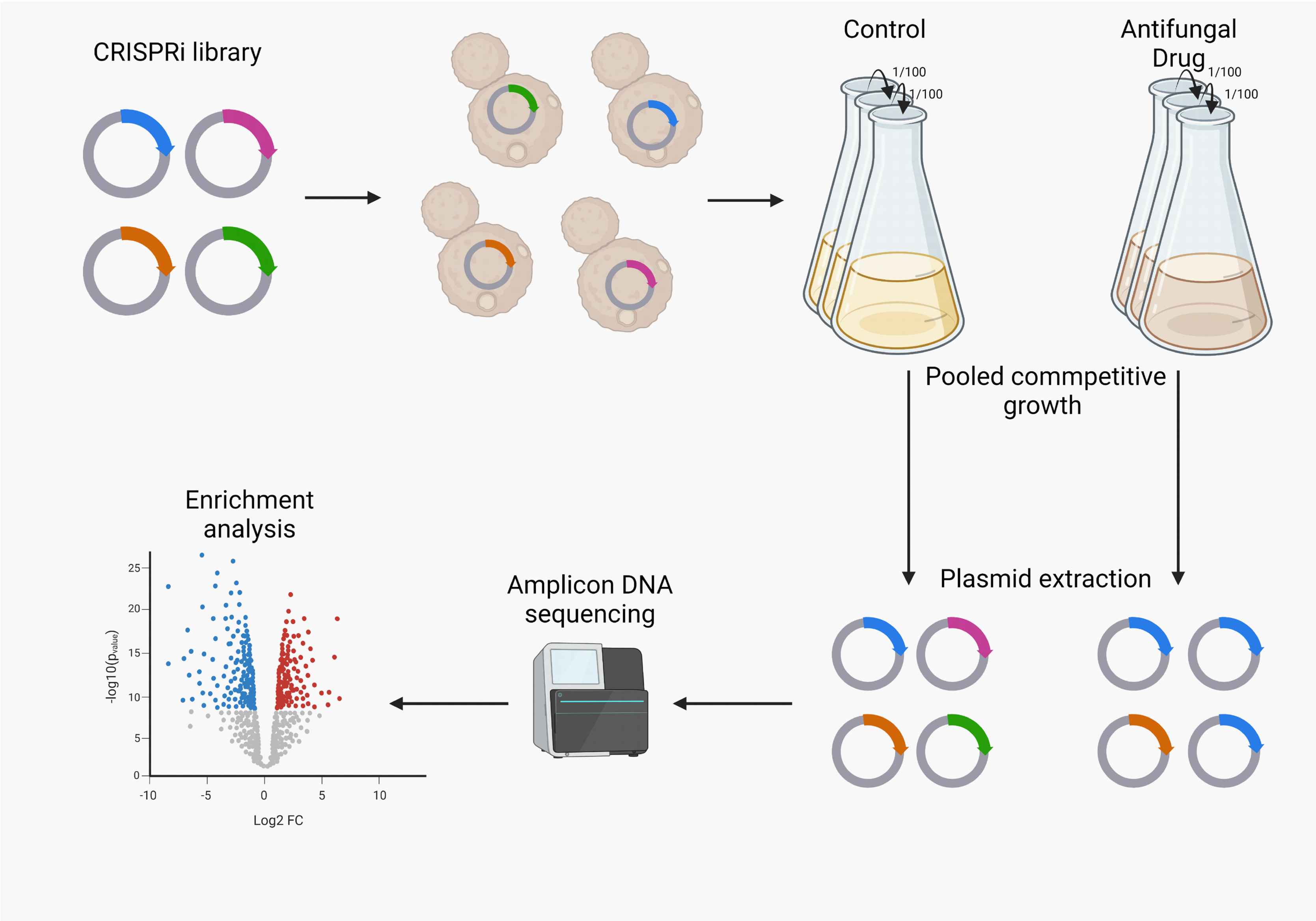
We use genome-scale CRISPRi screens to perturb gene expression across the fungal genome. Sequencing-based enrichment analysis identifies pathways and genetic factors that influence resistance, sensitivity, and tolerance under antifungal exposure.
- Identification of pathways required for antifungal survival
- Prioritization of genetic targets for mechanistic follow-up
- Quantitative sensitivity and resistance scoring from pooled screens
Genome-scale CRISPRi: pooled perturbation, selective growth, sequencing-based readout.
2. Plant-derived antifungal discovery and quantitative phenotyping
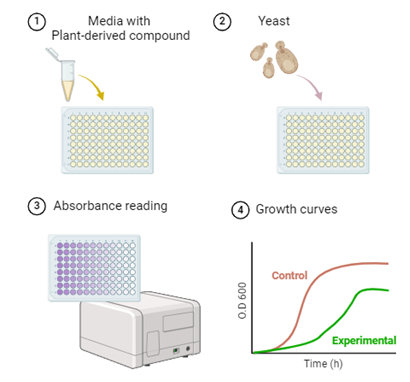
We screen and fractionate plant extracts to identify small molecules with antifungal activity, then quantify inhibition and recovery kinetics under defined conditions using standardized plate-based assays and computational profiling.
- Bioactivity-guided fractionation to identify active antifungal molecules
- Quantitative inhibition and recovery kinetics for persistence and tolerance
- Synergy testing with existing antifungal drugs
Quantitative phenotyping: standardized inoculation, time resolved growth dynamics, extraction of phenotypic parameters.
3. Mechanistic dissection using integrative multi-omics
We integrate CRISPRi-based genetic screens with transcriptomics and proteomics to define mechanisms of antifungal response, validate targets, and resolve stress adaptive regulation.
- RNA sequencing and proteomics for pathway interpretation
- Candidate validation through targeted perturbation
- Mechanistic mapping of antifungal response networks
Functional validation: CRISPRi knockdown, phenotypic assays, stress response profiling.